Blog · · 6 min read
How to Talk Politics at Thanksgiving Without a Fight
You can talk politics at Thanksgiving and still get pie. Agree on rules before the turkey, ask before you argue, and leave every door open.
You talk politics at Thanksgiving without a fight by settling three things early. Agree on ground rules before dinner. Ask questions before you make points. And give everyone at the table a graceful way out, including yourself. Do those three and the conversation stays a conversation. Skip them and you get the same argument as last year, with gravy.
I’m not going to tell you which side is right at your table. That isn’t the job of this post, and it isn’t how you keep a family.
The short version: three rules for the table
Here they are, small enough to write on the back of a place card.
- Set the menu before you sit down. Decide what’s on the table for discussion and what stays in the kitchen.
- Ask before you argue. Your first three sentences are questions.
- End with “please prove me wrong.” Say it and mean it. It’s the graceful way out, for them and for you.
The rest of this post is how to do each one when your brother-in-law has had a second glass of wine and the football game is at halftime.
Before dinner: agree on what’s on and off the menu
The host sets the menu for the food. The host can set it for the talk too.
A day or two before, send one short message to the family. Something like: “We’re glad to talk about anything at dinner except who voted for whom. If it gets loud, we switch to dessert.” That’s it. No speech. People like knowing the rules before they walk in, and the person most likely to start something now knows the line ahead of time.
What belongs on the menu? Things you can talk about without putting anyone’s character on trial. How your town is doing. What the schools are teaching. Whether the country still teaches its own founding well, which is a fair question in 2026, the 250th year since 1776.
What stays off? A person’s vote. A person’s intelligence. Anything that starts with “people like you.”
Ask before you argue
Most table fights start the same way. Someone makes a statement, someone else makes a counter-statement, and by the third round nobody is listening, they’re reloading.
Flip it. Before you make your point, ask a question, and ask it because you want the answer.
- “What got you to that view?”
- “What would change your mind?”
- “Where do you think we agree?”
Then do the hard part. Say their view back to them in your own words, and keep at it until they say “yes, that’s what I mean.” You’ll be surprised how often the fight ends right there. A lot of anger at the table isn’t disagreement. It’s the feeling of not being heard.
I call myself a generalist, and the first thing that habit teaches you is that the question matters more than the answer. In my book I put it this way: “The edge, the genius, lies in asking the right question.” That works on hard engineering problems. It works even better on an uncle.
Use the Golden Rule as the tie-breaker
Sooner or later two good people at the same table will reach a point where both sides sound reasonable and neither will budge. You need a tie-breaker that both of them already accept.
Most American families already have one. The Golden Rule: treat others the way you’d want to be treated. In Common Sense 2.0 I propose that the country adopt as its basic principle “Coherence, with a bias for the Golden Rule,” and I spell out that the bias is there to break “a tie between equals.” That’s a proposal for a nation, and you’re free to argue with it. At a dinner table it’s just good manners with a spine.
So when the argument stalls, ask the Golden Rule question out loud. “If the shoe were on the other foot, how would you want this handled?” Ask it of both sides. Ask it of yourself first.
Say ‘please prove me wrong’ and mean it
My book makes a strong argument, and then it stops and says this:
Please prove me wrong.
I put that line there on purpose. A man who believes something should be willing to hear the case against it, and he should say so before anyone else has to drag it out of him. Four words. They do more to cool a room than any amount of being right.
At the table it works like this. You’ve made your point. Instead of pressing it, you hand the floor over. “That’s how I see it. Please prove me wrong.” Now the other person isn’t defending against an attack. They’ve been invited. Some will take the invitation and teach you something. Some will shrug. Either way nobody is cornered, and a cornered relative is the one who throws the first insult.
You have to mean it, though. If someone does prove you wrong on a point, say so at the table. That one admission buys you more goodwill than a dozen clever arguments.
When to change the subject
Some signs that it’s time:
- Voices go up and stay up.
- Someone repeats the same sentence a third time.
- The kids have gone quiet, or a guest has started clearing plates nobody asked them to clear.
- You notice you’re arguing to win, not to understand.
When you see one, don’t announce a ceasefire. Offer the exit and take it yourself. “Let’s pick this up after pie.” “I want to think about what you said.” Then ask about something everyone can answer: the grandkids, the high school team, who made the stuffing. No one keeps score on the way out.
The goal of Thanksgiving isn’t a winner. It’s next Thanksgiving, with everybody still coming.
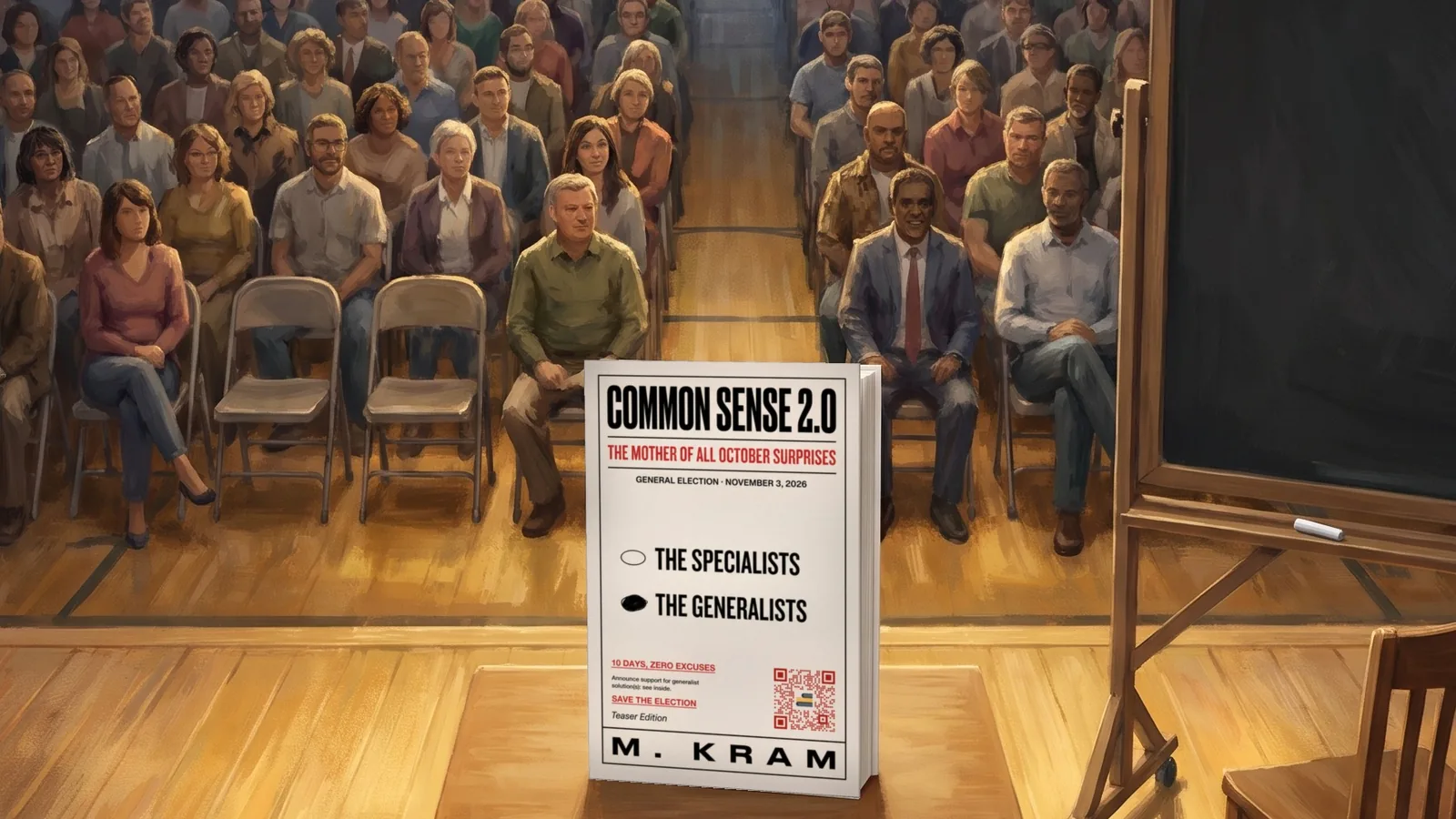
If you want something to talk about that isn’t last night’s headlines, Common Sense 2.0 is a conversation starter for the family table: about 40 pages, readable before dessert, and $3.99 as an EPUB. It argues a case and asks you to knock it down. Bring the rules above.
Questions
How do you talk politics with family at Thanksgiving without a fight?
Agree on ground rules before dinner, ask questions before you make points, and give everyone a graceful way out of the conversation.
Is it rude to talk about politics at Thanksgiving?
Not if the host and the table agree to it first. It turns rude when one person springs it on people who came for turkey, or when it turns into a verdict on someone’s vote.
What should you do if a political argument gets heated at dinner?
Stop arguing the point and name the thing you agree on. Then offer an exit, like picking it up after pie, and change the subject without keeping score.
How do you disagree about politics respectfully?
Restate the other person’s view until they say you got it right, ask what would change their mind, and invite them to prove you wrong.