Blog · · 6 min read
Thomas Paine’s Common Sense: Summary and What It Means Today
What Paine argued in 1776, the lines worth remembering, and why a plain pamphlet for ordinary readers still matters 250 years later.
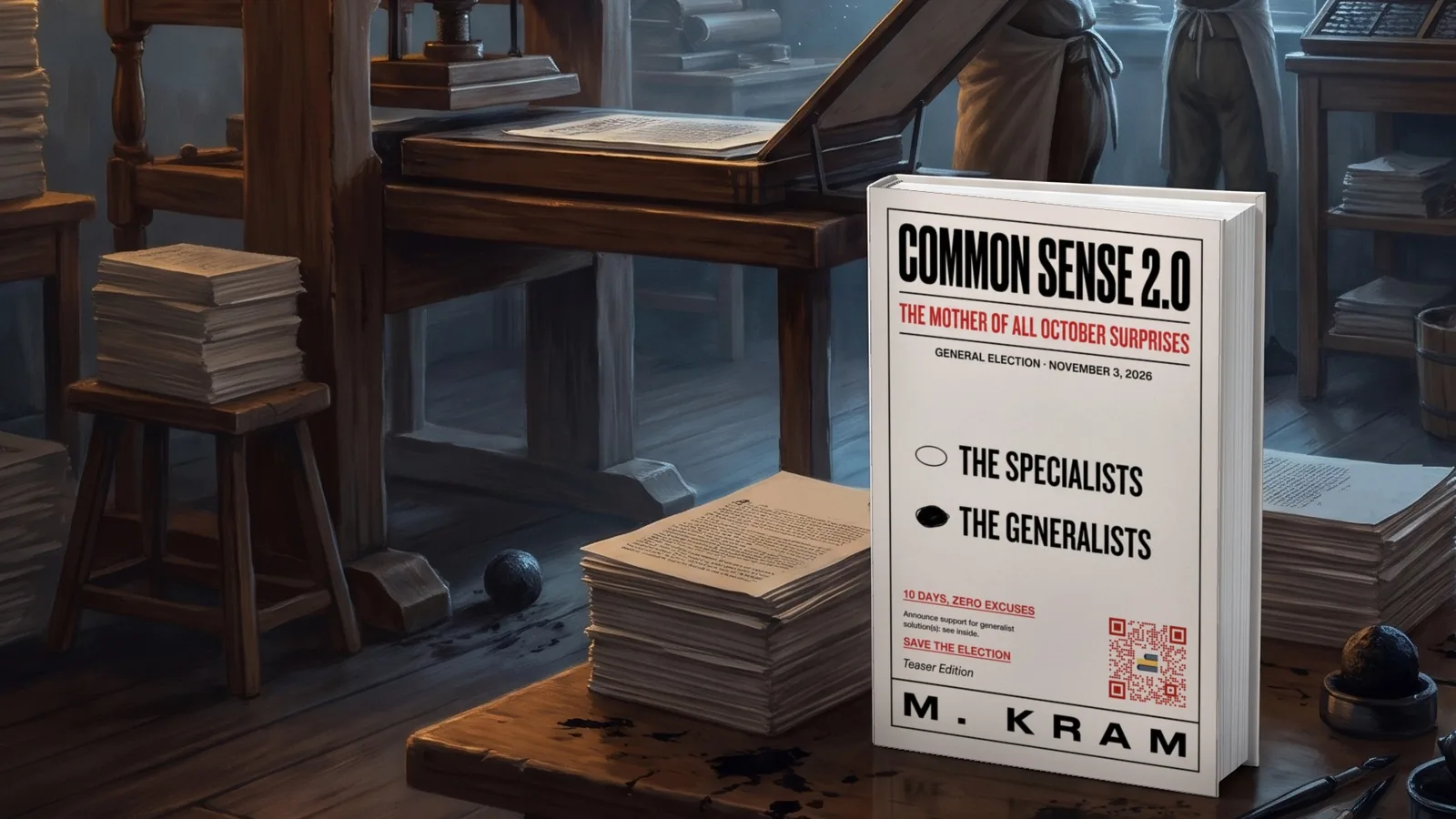
What is Thomas Paine’s Common Sense about? It’s a 1776 pamphlet, written in plain language for ordinary colonists, arguing that America should declare independence from Britain and govern itself as a republic. Paine aimed it at farmers, shopkeepers and tradesmen, and dared anyone to answer it. That’s the whole thing in two sentences.
The longer version is worth your evening. Two days after an election is a good time to read it, too. Here’s a summary, the lines worth knowing, and what it says to us 250 years on.
Common Sense in one paragraph
Paine opens by separating society, which people build because they need each other, from government, which they put up with because people misbehave. He takes apart the English constitution and the idea of kings. Then he turns to the question everyone in the colonies was dodging: patch things up with Britain, or leave? Leave, he says, and now. He closes by showing the colonies already have the men, the land and the means to build a navy and stand alone.
He wrote it so a man could read it aloud in a tavern and be understood by everyone at the table. That was the point.
The free text I quote from is Project Gutenberg’s eBook #3755, taken from The Writings of Thomas Paine, collected and edited by Moncure Daniel Conway. Its postscript to the third edition is dated “Philadelphia, February 14, 1776.”
The four main arguments
The pamphlet has four sections, and each one carries one argument.
I. Government is a necessary evil
The section titled “Of the Origin and Design of Government in General” says society is a blessing and government is the price of human weakness. He then calls the English constitution “so exceedingly complex, that the nation may suffer for years together without being able to discover in which part the fault lies.”
II. Hereditary monarchy is absurd
In “Of Monarchy and Hereditary Succession” he asks why one family should rule forever because an ancestor once grabbed a crown. A good king’s son can be a fool. A nation gets no say.
III. Reconciliation is a dead end
“Thoughts on the Present State of American Affairs” is the heart of it. He argues that Britain trades with America for Britain’s sake, drags America into Britain’s wars, and that there is “something very absurd, in supposing a continent to be perpetually governed by an island.”
IV. America can stand alone now
“Of the Present Ability of America” answers the people who said wait. “The TIME HATH FOUND US,” he writes. He points out that America “is without a debt, and without a navy,” and argues it could build a navy for a small slice of what Britain owes.
Five quotes worth knowing (from the Gutenberg text)
These are copied from the Gutenberg file, capitals and spelling as printed:
- “Society in every state is a blessing, but government even in its best state is but a necessary evil” (section I).
- “Of more worth is one honest man to society and in the sight of God, than all the crowned ruffians that ever lived.” (section II)
- “The blood of the slain, the weeping voice of nature cries, ‘TIS TIME TO PART.” (section III)
- “in America THE LAW IS KING.” (section III)
- “We have it in our power to begin the world over again.” (appendix)
If you only memorize one, take the fourth. Paine finishes the thought in the next sentence: “For as in absolute governments the King is law, so in free countries the law OUGHT to be King; and there ought to be no other.” Four capital words, and a whole theory of government.
Why it sold: plain words for ordinary readers
You’ll see big sales numbers for Common Sense on summary sites, and they vary a lot from one site to the next. I won’t print a figure I can’t source. What I can show you is how Paine wrote, because the text is right there.
He promised nothing fancy. “I offer nothing more than simple facts, plain arguments, and common sense,” he says at the start of section III. No Latin showing off. No lawyer’s hedging. Short sentences when he wants you to feel something, long ones when he’s walking you through a case.
And he kept himself out of it. The introduction says “the Object for Attention is the DOCTRINE ITSELF, not the MAN,” and that he is “unconnected with any Party.” The argument had to win on its own, and nobody had a personality to like or hate instead of reading it.
He also dared the other side. The postscript to the third edition notes that no answer refuting independence had appeared, “it is now presumed that none will.” A pamphlet that asks to be refuted, and isn’t, gets stronger every week it stands.
What Common Sense means today
This year is 2026, which puts us 250 years from 1776. We still argue about government in the terms Paine set out, whether we’ve read him or not.
Three things in the pamphlet still apply in 2026.
First, write plainly. If an argument can’t be explained to a neighbor in his own words, it probably isn’t finished. Paine wrote for the man at the next table, and every public servant should be held to that standard.
Second, the law is king. Paine’s line carries more weight than any slogan you heard this fall.
Third, after the fight, offer your hand. In his appendix Paine asks each reader to “hold out to his neighbour the hearty hand of friendship,” and writes: “Let the names of Whig and Tory be extinct.” Whatever happens on November 3, I can’t think of better advice. Win or lose, your neighbor is still your neighbor.
How Common Sense 2.0 borrows the model
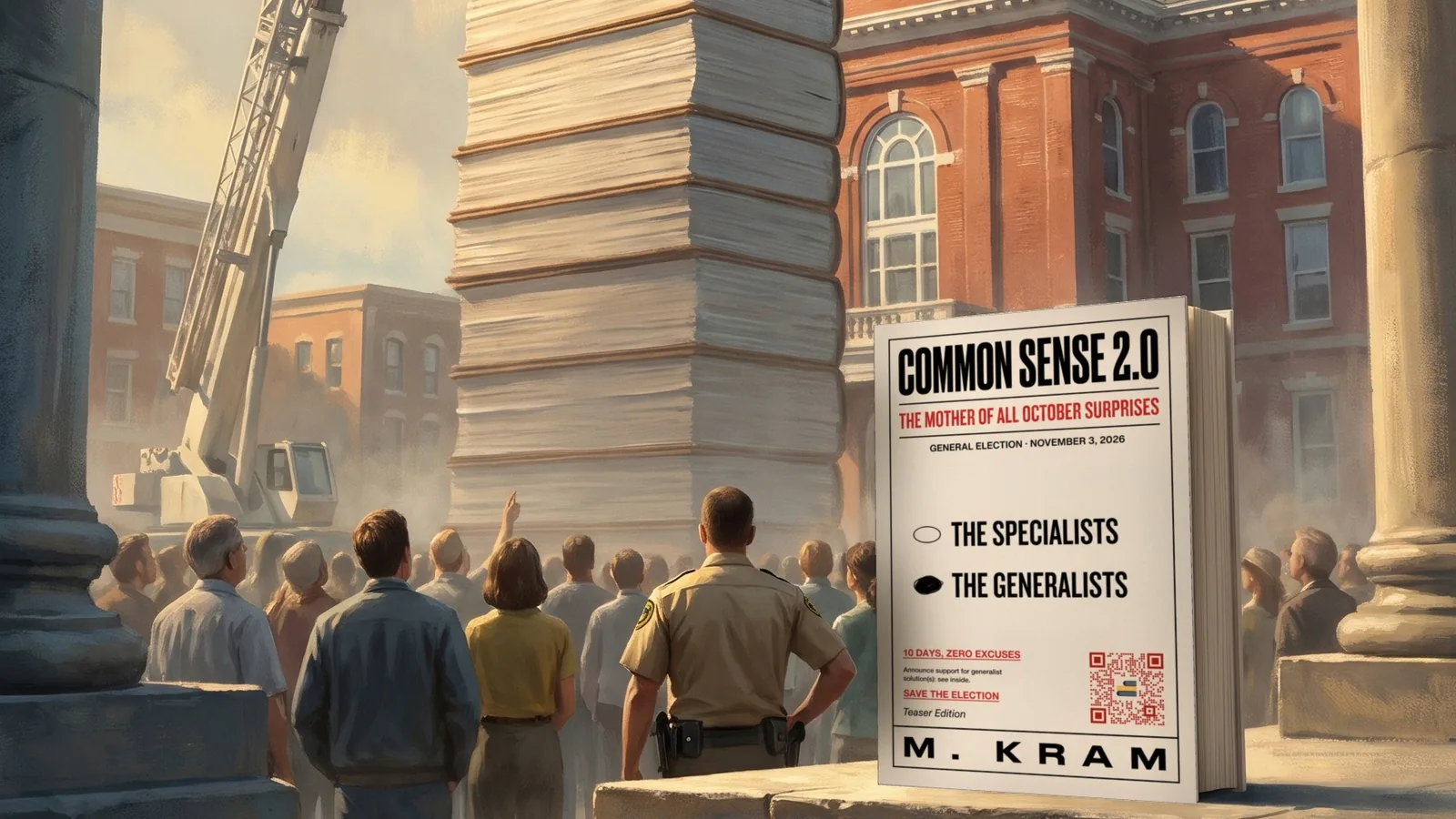
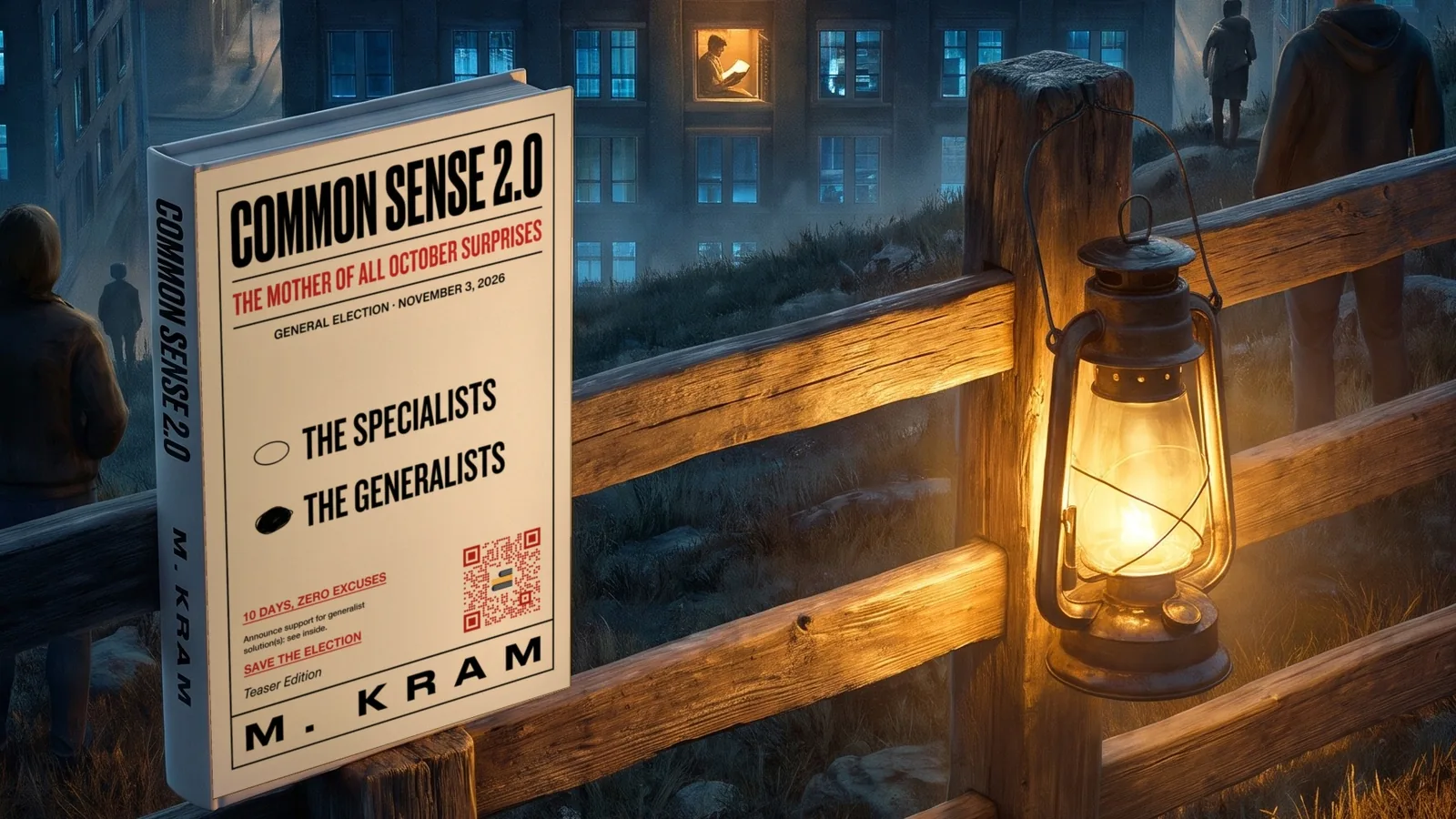
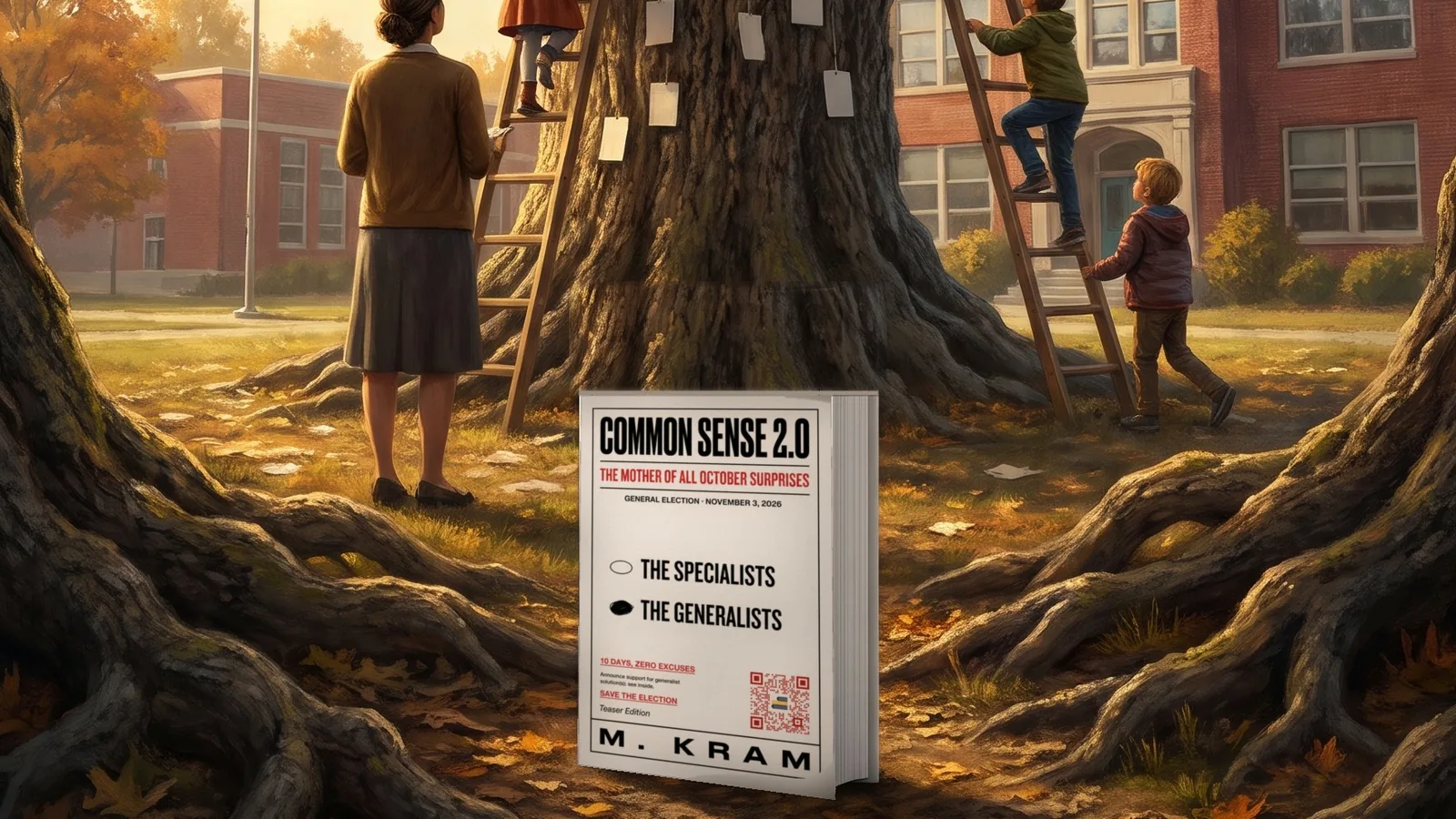
I borrowed Paine’s title for my own pamphlet, Common Sense 2.0, and I didn’t do it lightly. It’s 40 pages, plain words, written for ordinary readers who suspect the experts have lost the thread. In its last appendix I trace where America’s founding ideas came from, and Paine is the root I end on:
Paine’s 1776 Common Sense showed how to apply that expertise to the problem of oppression.
The “expertise” there is what I call generalism: the knack for seeing how one field connects to the next. I argue that the Founders had it in abundance, that they trained it on purpose, and that we stopped. I put the natural rate at roughly one per million births. That’s my estimate, and I say so.
I borrowed Paine’s dare too. He presumed no answer would appear. I wrote “Please prove me wrong.” Same invitation, 250 years later.
If you’re thinking about how ordinary people move an election, start with What Is an October Surprise?, and if you want to test my book the way Paine wanted his tested, use How to Fact-Check a Political Claim in Five Minutes.
Paine wrote for farmers and shopkeepers. I wrote a 40-page pamphlet under his title for the rest of us, and it reads in about 40 minutes. Get the EPUB for $3.99 and see whether the title is earned.
Questions
What is Thomas Paine’s Common Sense about?
Common Sense is a 1776 pamphlet, written in plain language for ordinary colonists, arguing that America should declare independence from Britain and govern itself as a republic.
What are the main points of Common Sense?
Paine argues four things in four sections: government is at best a necessary evil, hereditary monarchy makes no sense, reconciliation with Britain is a dead end, and America already has the strength to stand on its own.
What are some well-known quotes from Common Sense?
Two lines worth knowing: Society in every state is a blessing, but government even in its best state is but a necessary evil, and We have it in our power to begin the world over again.
Where can I read the full text of Common Sense for free?
Project Gutenberg publishes it free as eBook #3755, taken from The Writings of Thomas Paine, collected and edited by Moncure Daniel Conway.