Blog · · 6 min read
What Can One Citizen Do Before an Election? 9 Things That Still Count
Election Day is Tuesday, November 3, 2026. Here are nine things one citizen can still do before then, and one for the morning after.
What can one citizen still do in the last days before an election? Three things, in this order. Confirm your registration and polling place with your state election office. Read your full sample ballot, every line of it. Then talk to one neighbor about one race. Those three take about an evening, and they beat a week of shouting online.
Election Day is Tuesday, November 3, 2026. The days between now and then are plenty if you stop waiting for somebody else to do it.
Here are all nine, with no party line attached. I don’t care who you vote for in this post. I care that you show up having done the reading.
The short answer: three things that matter most before Election Day
If you only do three, do numbers 1, 4 and 7 below. Confirm your registration and polling place today, while there’s still time to fix a problem. Read the whole sample ballot, because the bottom half is where your vote carries the most weight. Talk to one person you actually know, about one race you’ve actually read up on.
The other six build on those. Some take ten minutes. The last one takes a year.
Check your registration, polling place and ID rules
1. Confirm your registration with the official source
Go to vote.gov, the U.S. government’s voting site, and follow it to your own state’s election office. Skip the group texts and the screenshot your cousin forwarded. If there’s a problem with your registration, today is a far better day to find out than Election Day at the front of a line.
2. Look up your own state’s rules, because they’re different
Polling hours, what ID you need, whether early voting is still open, how late a mail ballot can arrive. None of it is national. The Constitution, Article I, Section 4, says “The Times, Places and Manner of holding Elections for Senators and Representatives, shall be prescribed in each State by the Legislature thereof.” So the answer lives on your state or county site, and nowhere else.
3. Put your polling place and your time on paper
Write down the address and the hour you plan to go. Phones die. Lines happen. A plan written on the back of an envelope beats a good intention every time.
Read the whole ballot, not just the top race
4. Read every line before you get to the booth
Most people walk in knowing the top race and guess at the rest. That’s backward.
Down the ballot you’ll find the county offices, the judges, the school board, the sheriff in a lot of places, and local measures that change your property tax or your road. Those races are decided by small numbers of voters. The fewer people who read them, the more your one vote weighs.
Your county election office publishes a sample ballot. Print it. Mark it up at the kitchen table with a pencil.
5. Look up every name you’ve never heard of
Give each one ten honest minutes: the candidate’s own site, the local paper, the voter guide your county or state mails out. If you still can’t tell, it’s fine to leave a line blank. A blank beats a coin toss.
Ask every candidate one common-sense question
6. Pick one question and ask it of everybody
Same question, every party, every office. One question that works: “What’s the first problem you’ll fix, and how will I know by next November whether you fixed it?”
A candidate who answers with a slogan has told you something. A candidate who names a problem, a date and a way to measure it has told you more. You can ask at a forum, by email to the campaign, or on a call to the office. Local candidates often pick up the phone themselves.
In my book I put it this way, in the appendix on generalists: “The edge, the genius, lies in asking the right question.” It holds at a town meeting the same as anywhere else.
Talk to one neighbor, not a thousand followers
7. Have one real conversation
A post to a thousand strangers changes nobody’s mind. A conversation over a fence sometimes does, and even when it doesn’t, it gets two people reading the same ballot.
Keep it to one race. Say what you read and where you read it. Ask what they’ve heard. Listen to the answer all the way through before you reply, which is harder than it sounds in an election year.
If you disagree, fine. Two neighbors who disagree and both read the measure are worth more to a republic than two who agree and read nothing.
Volunteer: rides, poll work, childcare for a voter
8. Give one person the hour they need to vote
The polls are open on Election Day, but plenty of people can’t get there: a shift that runs through polling hours, no car, three kids under five, a knee that won’t do the walk.
Offer a ride. Offer to watch the kids for an hour. Offer to sit with an older neighbor and read a long ballot out loud. None of that needs a campaign’s permission or a party’s T-shirt.
Poll worker sign-ups may be closed by now in your county. Call the county election office anyway and ask what they still need. If the answer is “nothing this year,” ask how to sign up for the next one.
After you vote: what Nov 4 asks of you
The morning after is where most citizens clock out. That’s the mistake.
9. Keep the question, and keep score
Take the question you asked in step 6 and write it down, with the name of whoever wins and the date one year out. Then check. Call the office. Write the letter. Show up at the meeting where the budget gets voted on. An election is a hiring decision, and nobody hires someone and then stops watching the work.
Here’s how the main section of my book, Common Sense 2.0, closes. I meant every word:
America, it is up to us.
Will Liberty, and the American Idea, wither and die on our watch?
I argue in that book that the Founders trained ordinary people to solve hard problems, and that we can learn the same skill. I’m not asking you to agree with me before November 3. “This author offers DIY training below in App. 4,” the book says, and that appendix holds three word games anyone can play at a kitchen table with a pencil. That kind of thinking is what steps 6 and 9 need.
If the late-October news has you rattled, read What Is an October Surprise? first. If somebody hands you a statistic you don’t trust, How to Fact-Check a Political Claim in Five Minutes shows the method.
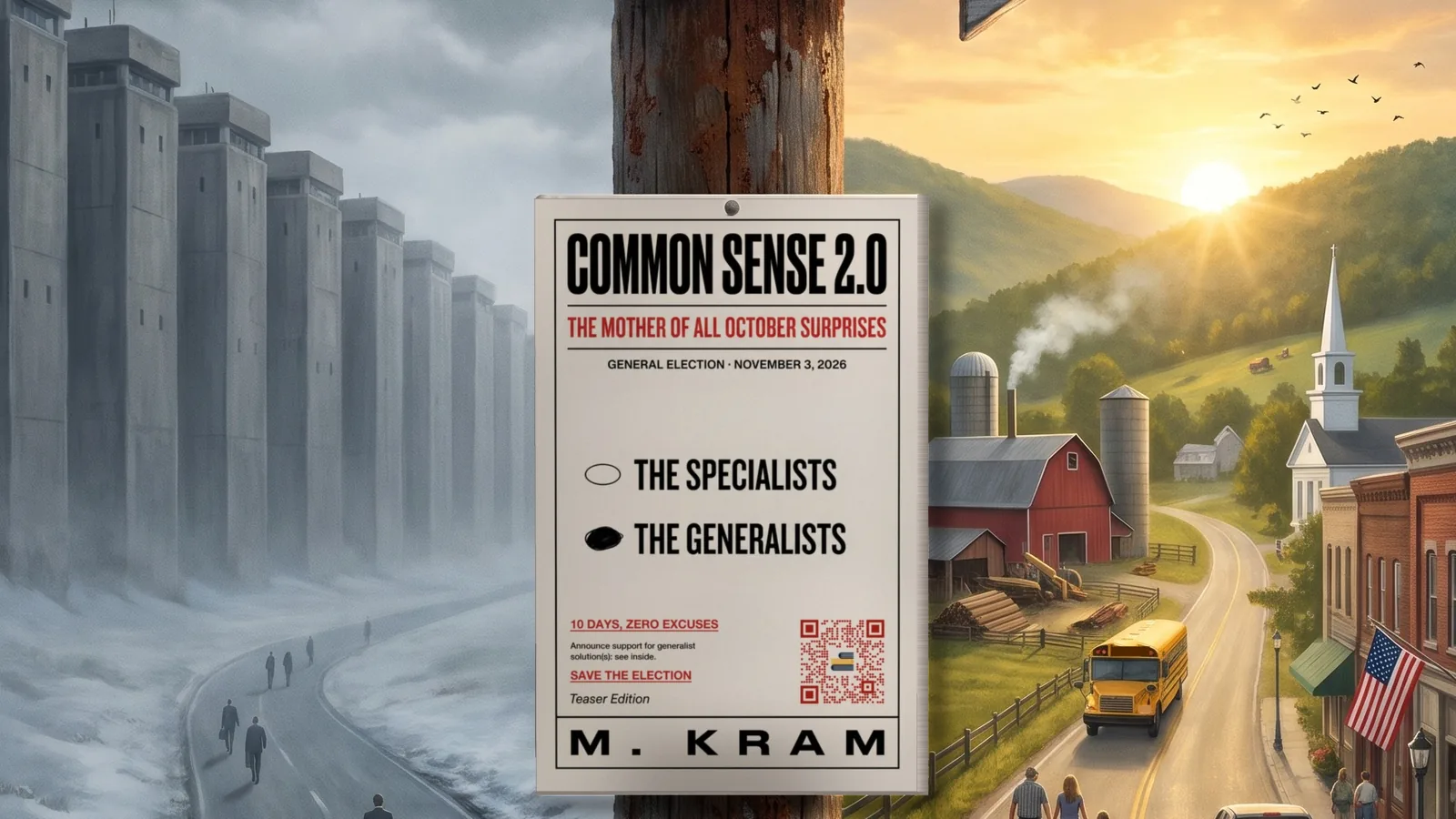
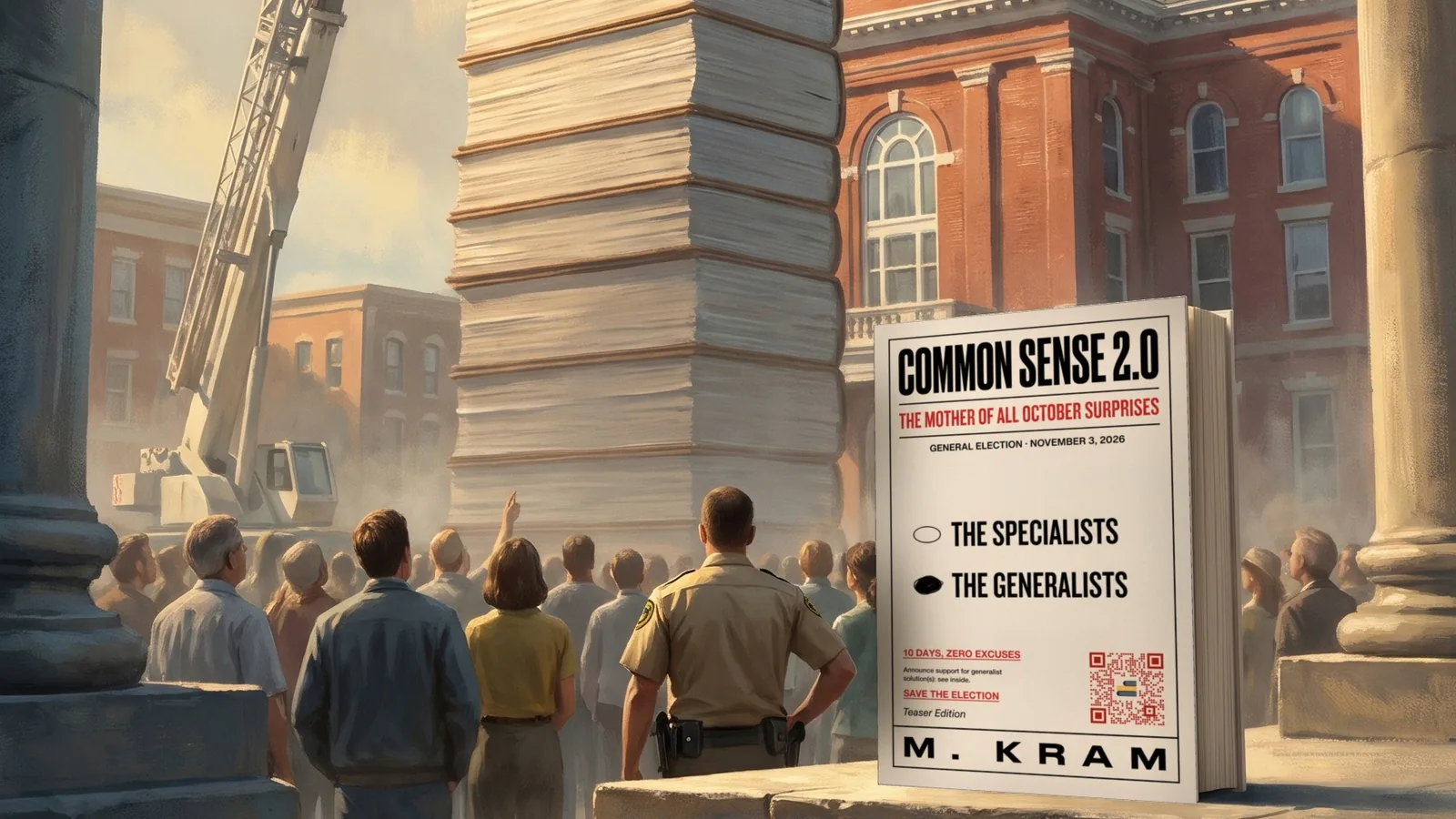
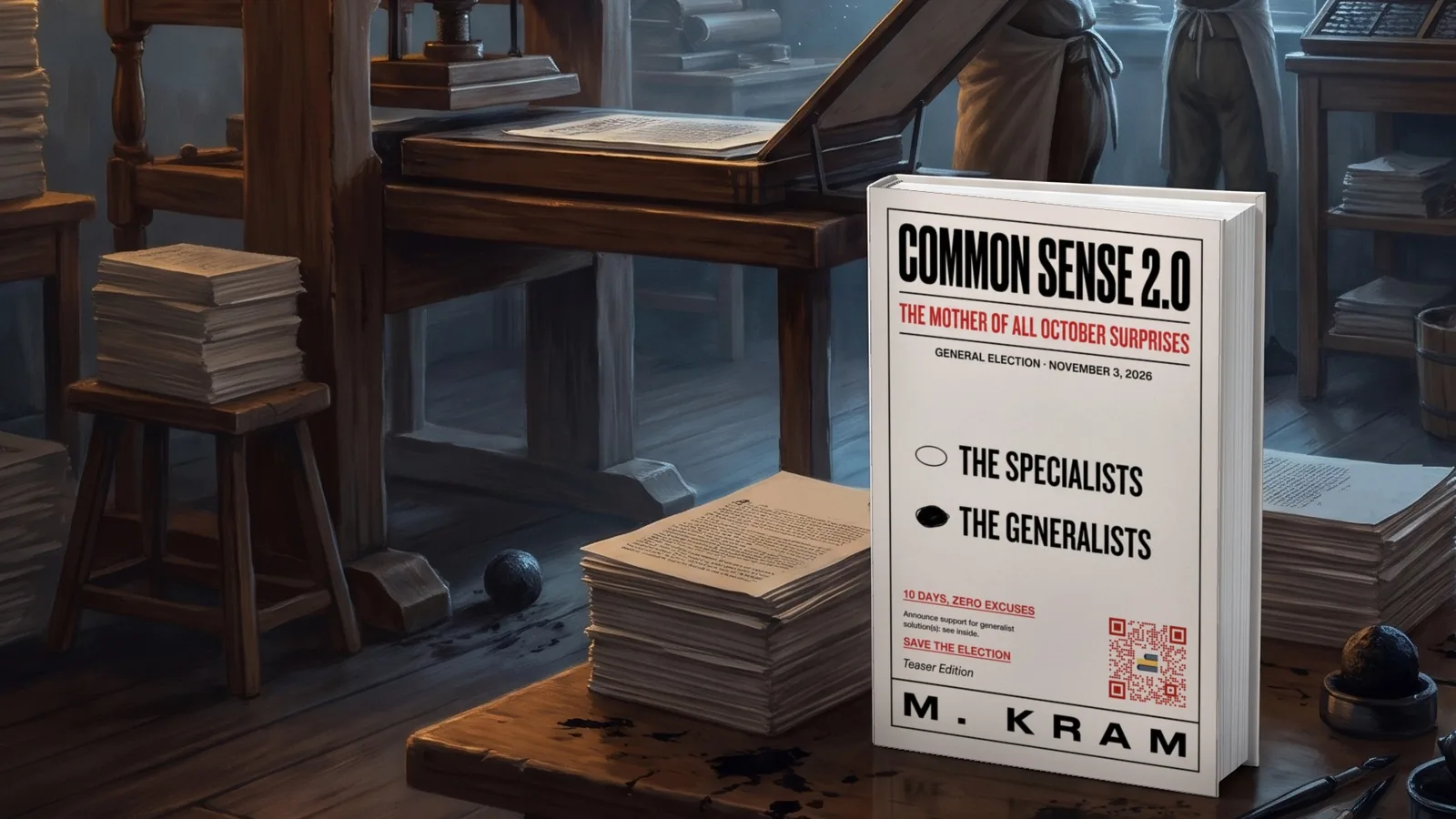
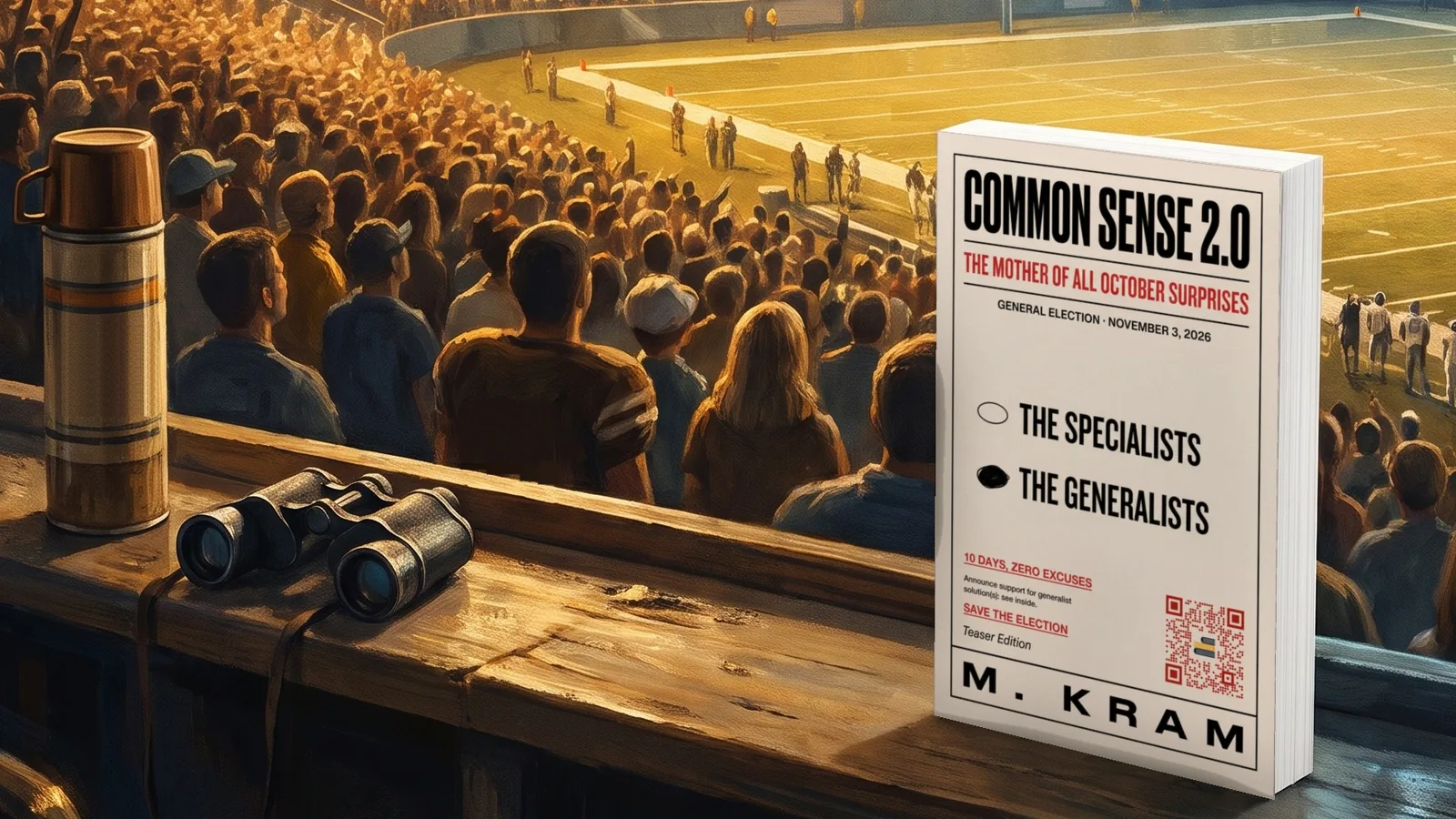
I wrote a 40-page pamphlet about what ordinary citizens can still do for this country, and its main section closes on “America, it is up to us.” It reads in about 40 minutes. Get the EPUB for $3.99 and read it tonight, before you fill in your ballot.
Questions
What can one citizen do in the last days before an election?
Three things matter most. Confirm your registration and polling place with your state election office, read your full sample ballot, and talk to one neighbor about one race.
Where do I check my voter registration and polling place?
Start at vote.gov, the official U.S. government site, which sends you to your own state’s election office. Use the state or county site for polling places, hours and ID rules, because each state sets its own.
Is it too late to volunteer before Election Day?
Often it is not. Poll worker training may be closed, but neighbors still need rides to the polls, someone to watch the kids for an hour, or a hand reading a long ballot. Call your county election office and ask what is still open.
What should I do after I vote?
Write down one question you want the winner to answer within a year, and keep it. Then hold them to it. An election is a hiring decision, and the work starts on November 4.